
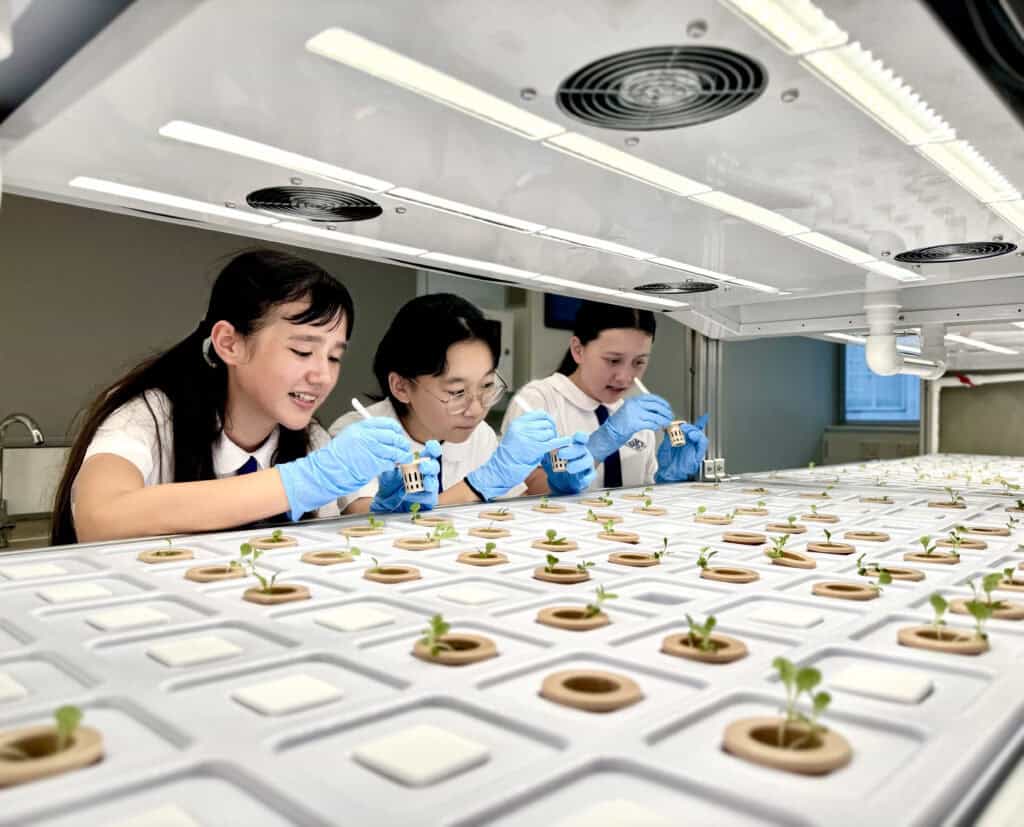
Transforming Classrooms into Smart Farms, Bringing Agri-Tech and Educational Innovation to Ten Local Secondary Schools
Farmacy Group, an award-winning local AgriTech startup, proudly unveils Farmunity (Farm-for-the-community), Hong Kong’s first programme to transform school classrooms into high-tech Smart Farm Labs. With a bold vision to cultivate future-ready, sustainability-driven leaders, Farmunity blends hands-on agriculture, cutting-edge technology, and entrepreneurial learning into a transformative educational experience.
Backed by generous support from the Social Innovation and Entrepreneurship Development Fund, Lee Hysan Foundation, Oxfam Grant For Good, and Kerry Properties, Farmunity has secured solid funding and partnerships. To date, the programme has been successfully integrated into ten secondary schools, empowering over 1,200 grassroots students with environmental stewardship, entrepreneurship, and green skills development, producing over 20,000 vegetables annually. Recognised with the “Annual Outstanding Award” by Oxfam Grant for Good, Farmunity exemplifies how smart, purpose-driven education can drive positive social and environmental change.
Reinventing ESG for Students: Farmunity’s Unique Model
At the heart of Farmunity lies a bold redefinition of ESG, not just as Environmental, Social, and Governance, but as Entrepreneurship, STEM, and Green Skills. This forward-thinking framework equips students with the interdisciplinary tools needed to thrive in the future green economy.
Through Smart Farm Labs and cabinet-sized Smart Mobile Farms, students explore hydroponic systems, IoT applications, and cloud-based automation, gaining botanical and technical knowledge. Beyond classrooms, Farmunity meets the growing demand from education and corporate sectors for talent skilled in sustainability and practical green technologies. Programme convenors and Farmacy Group co-founders Anthony Huen, Wing Kwong, and Raymond Mak say, “Our aim is to ensure the future generation of entrepreneurs lead with purpose, putting innovation, community, and sustainability first.”
Growing Future Entrepreneurs: Nurturing Innovation and Community Impact
Students first learn about hydroponic technology and plant growth, developing a deep appreciation for the vegetables they cultivate. They then pitch their crops to businesses, gaining practical entrepreneurial skills. Smart Farm Labs facilitate hands-on STEM learning, covering IoT devices, environmental sensors, cloud operations, AI automation, and botanical science. Students also tackle social entrepreneurship by designing sustainable, scalable business models that address community needs.
Dr. Pam Lau, Principal of Kit Sam Lam Bing Yim Secondary School, a participating school, said, “The programme gives students hands-on experience applying STEM and creative problem-solving. Their vegetable donations benefit vulnerable groups while building partnerships with businesses, social enterprises, and NGOs to sustainably support the community.”
So far, students have partnered with NGOs such as Feeding HK and Agents of Change to donate nutrient-rich leafy greens to low-income families. They have established their farms as sustainable, local food sources and have learned to pitch and sell their produce to hotels and restaurants.
Creating Permanent Green Spaces in Every School
Smart Farm Labs equip students with botanical and technical skills to establish and maintain “green corners” in their schools, bringing sustainability into daily school life. As Farmunity grows, it introduces positive and inclusive education, emphasizing wellness, accessibility, and equity. In the upcoming academic year, Farmunity has recruited a new cohort of primary and secondary schools to implement Smart Farm Labs, advancing our goal of a student-led sustainable school supply chain.
Farmunity is actively seeking partnerships with like-minded schools and organisations to build a full green circular movement, from cultivation to community use.